
Otto Powell · 10 September 2026
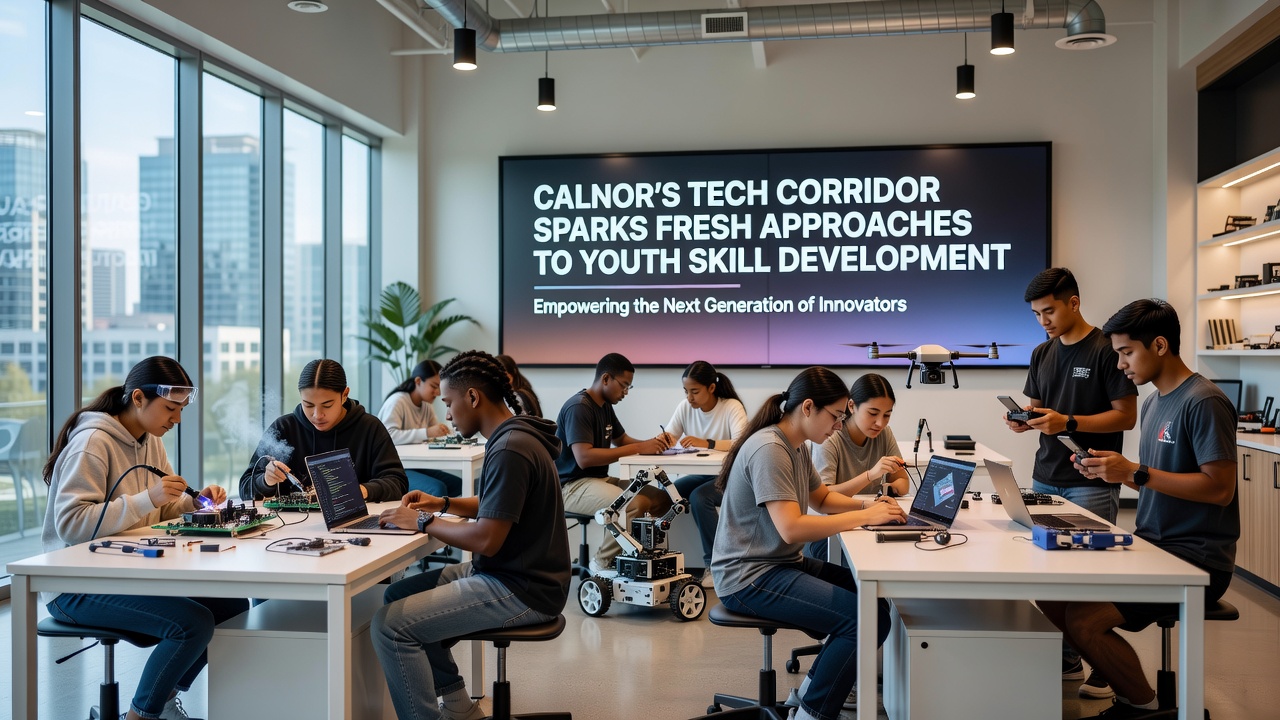
Calnor's Tech Corridor Sparks Fresh Approaches to Youth Skill Development
The Calnor Tech Corridor has emerged as a focal point for initiatives that connect educational institutions with technology firms to build practical skills among young people, and these efforts have expanded through coordinated programs that address digital literacy, software development, and data analysis competencies. Local authorities report that partnerships formed since 2023 have enrolled over 4,200 participants aged 16 to 24 in structured training modules, while industry data indicates a 28 percent rise in entry-level tech hiring from corridor companies between 2024 and 2025.
Partnership Models Driving Program Expansion
Companies along the corridor work directly with regional universities and vocational centers to design curricula that align with current workplace demands, and this alignment occurs through quarterly review sessions where employers specify required competencies in areas such as cloud infrastructure and cybersecurity protocols. One program launched in early 2025 pairs participants with mentors from established firms for six-month placements that combine classroom instruction with project-based assignments, resulting in documented skill gains measured through standardized assessments administered at the start and end of each cycle.
Observers note that these models differ from traditional classroom approaches by incorporating real-time feedback loops between trainees and industry supervisors, whereas earlier efforts often relied on static course materials without ongoing employer input. Data compiled by the Calnor Regional Development Agency shows completion rates averaging 87 percent across the 2024 cohort, with 62 percent of graduates securing related employment or further training within three months of finishing their modules.
September 2026 Summit Highlights Scaling Strategies
A regional summit scheduled for September 2026 will convene representatives from corridor businesses, government agencies, and academic bodies to review outcomes from the past two years and outline expansion plans for additional skill tracks in artificial intelligence applications and sustainable technology practices. Organizers expect attendance from 350 delegates, and preliminary agendas include presentations on funding mechanisms that have supported equipment upgrades at partner training centers.
According to figures released by the OECD Directorate for Education and Skills, similar corridor-style initiatives in other European regions have produced comparable employment transitions when programs maintain close employer involvement throughout delivery. Corridor administrators plan to incorporate these comparative insights during the September sessions, focusing on metrics such as wage progression and retention after 12 months in first jobs.
Measurement Frameworks and Reported Outcomes
Evaluations conducted by independent research teams track participant progress through pre- and post-program testing in technical and soft skills, while longitudinal surveys follow employment trajectories for up to 24 months after completion. Results from the initial 2024 intake indicate average hourly wage increases of 19 percent compared with control groups who did not participate, and these gains hold across both urban and suburban recruitment areas within Calnor.
Training providers have introduced modular pathways that allow participants to stack credentials in areas like network administration and user experience design, and this stacking option enables learners to pause and resume based on personal circumstances without losing prior progress. Government statistics released in mid-2025 show that corridor-linked programs account for 14 percent of all youth vocational enrollments in the broader Calnor administrative district, up from 7 percent two years earlier.
Resource Allocation and Infrastructure Support
Funding for equipment and instructor development comes through a combination of regional grants and contributions from corridor enterprises, with annual allocations exceeding 8.5 million euros dedicated specifically to youth skill infrastructure. Facilities upgraded in 2025 now include dedicated simulation labs for robotics and virtual reality environments, and these additions have enabled hands-on modules previously unavailable at scale.
Those who have studied the corridor's approach highlight the role of shared governance boards that include equal representation from education, industry, and local government, and these boards meet monthly to adjust program parameters based on labor market signals collected through employer surveys. Such structures help maintain relevance as technology requirements evolve, particularly in fields where certification standards update annually.
Conclusion
Calnor's Tech Corridor continues to refine its approach to youth skill development through sustained collaboration between sectors, and upcoming activities around the September 2026 summit will provide further data on scalability. Available records show steady enrollment growth alongside measurable employment outcomes, while infrastructure investments support expanded delivery capacity across participating institutions. Additional reporting from corridor administrators will track whether these patterns persist as new cohorts enter training cycles in 2026 and beyond.