Sam Krüger · 8 October 2026
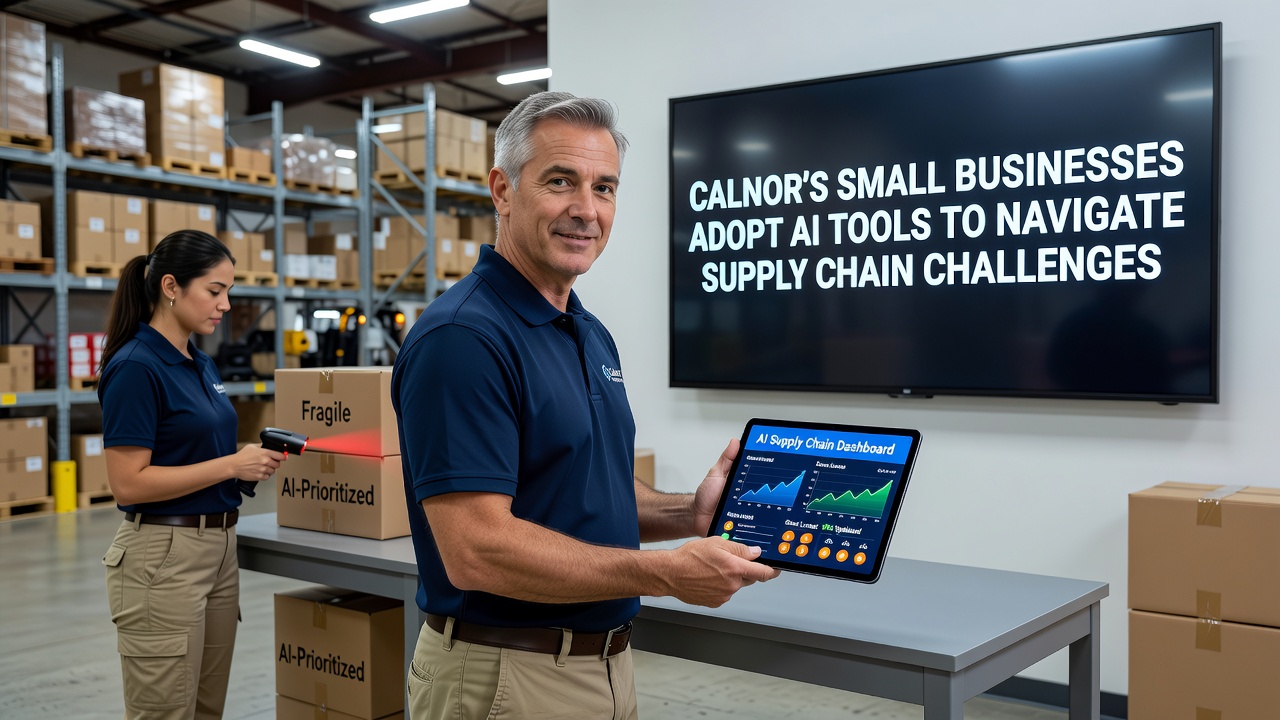
Calnor's Small Businesses Adopt AI Tools to Navigate Supply Chain Challenges
Small businesses across Calnor have turned to artificial intelligence systems in recent years as disruptions in global logistics networks continue to affect inventory management and delivery timelines, and data from October 2026 shows that adoption rates among firms with fewer than fifty employees reached 42 percent according to regional economic surveys.
Supply Chain Pressures Facing Local Enterprises
Calnor's economy relies heavily on imported components for manufacturing and retail sectors, yet port delays and fluctuating fuel costs have created persistent bottlenecks since the early 2020s, while companies report average lead time extensions of three to five weeks compared with pre-pandemic benchmarks. Researchers at the University of Helsinki documented similar patterns in neighboring regions, noting that smaller operators lack the buffer stocks larger corporations maintain, which leaves them exposed when raw material shipments stall at borders.
Business owners in sectors such as food processing and electronics assembly describe repeated instances where sudden supplier shortages forced production halts lasting days or weeks, and government statistics from the European Commission indicate that 68 percent of Calnor-based firms under 250 employees experienced at least one major disruption between January and September 2026.
AI Tools Entering the Picture
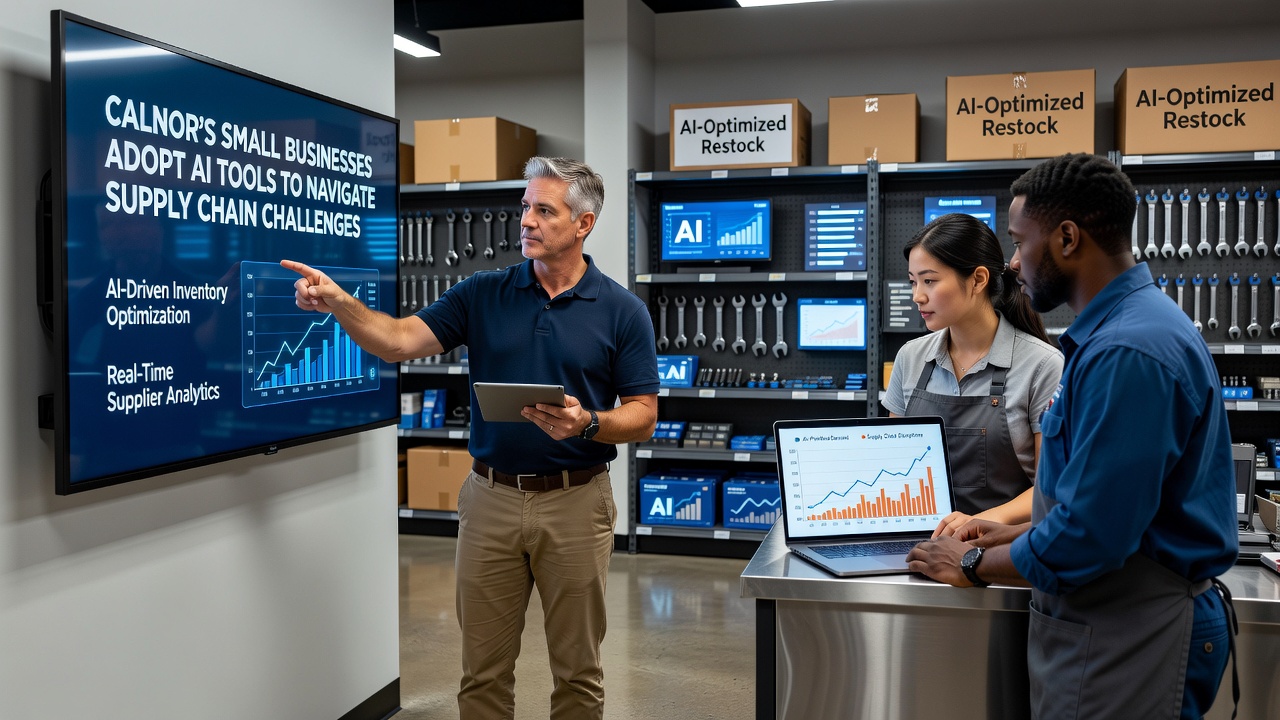
Software platforms using machine learning algorithms now help predict demand fluctuations and optimize routing decisions, and several providers have tailored interfaces specifically for users without dedicated IT departments. These systems analyze historical shipping data alongside weather reports and geopolitical indicators to flag potential delays before they occur, allowing managers to reroute orders or adjust order quantities in advance.
One textile manufacturer in central Calnor integrated a predictive analytics package last spring that reduced stockouts by 31 percent within six months, according to internal records shared with industry observers, while a similar tool adopted by a regional bakery cooperative adjusted ingredient orders based on real-time port congestion metrics pulled from public databases.
Implementation Patterns Among Smaller Operators
Many businesses begin with cloud-based services that require minimal upfront hardware investment, and training often occurs through short online modules offered by vendors or local chambers of commerce. Adoption tends to cluster around specific pain points such as inventory tracking rather than full end-to-end automation, and firms frequently combine AI outputs with existing spreadsheets instead of replacing legacy systems outright.
Funding support has played a measurable role, with grants administered through the European Regional Development Fund covering up to 60 percent of licensing fees for qualifying applicants in 2025 and 2026. Canadian trade ministry reports on comparable SME programs show parallel uptake when cost-sharing mechanisms reduce initial barriers, suggesting the pattern extends beyond European markets.
Measured Outcomes and Remaining Gaps
Early adopters report shorter response times to supplier issues and modest reductions in excess inventory carrying costs, yet integration challenges persist when data from multiple vendors arrives in incompatible formats. Industry associations note that staff time required to validate AI recommendations remains a constraint for teams already stretched thin, and some operators continue manual overrides for high-value shipments where the cost of error outweighs algorithmic suggestions.
Academic papers from the Technical University of Munich highlight that accuracy rates improve significantly after three to six months of localized data training, which aligns with experiences shared by Calnor users who refined models using their own order histories rather than generic datasets.
Conclusion
Calnor's small businesses continue exploring AI applications as supply networks stabilize unevenly, and ongoing updates to forecasting models reflect both seasonal patterns and longer-term shifts in trade regulations. External resources such as European Commission SME guidance and reports from the OECD on SME digitalisation provide additional context for those evaluating next steps.